Single mom dating · reviews and guides
Dating when there’s a child in the picture
Guides for both people in the same relationship: the mother who is dating, and the person dating her. Circumstances, not verdicts — and apps reviewed with a checked date on every claim.
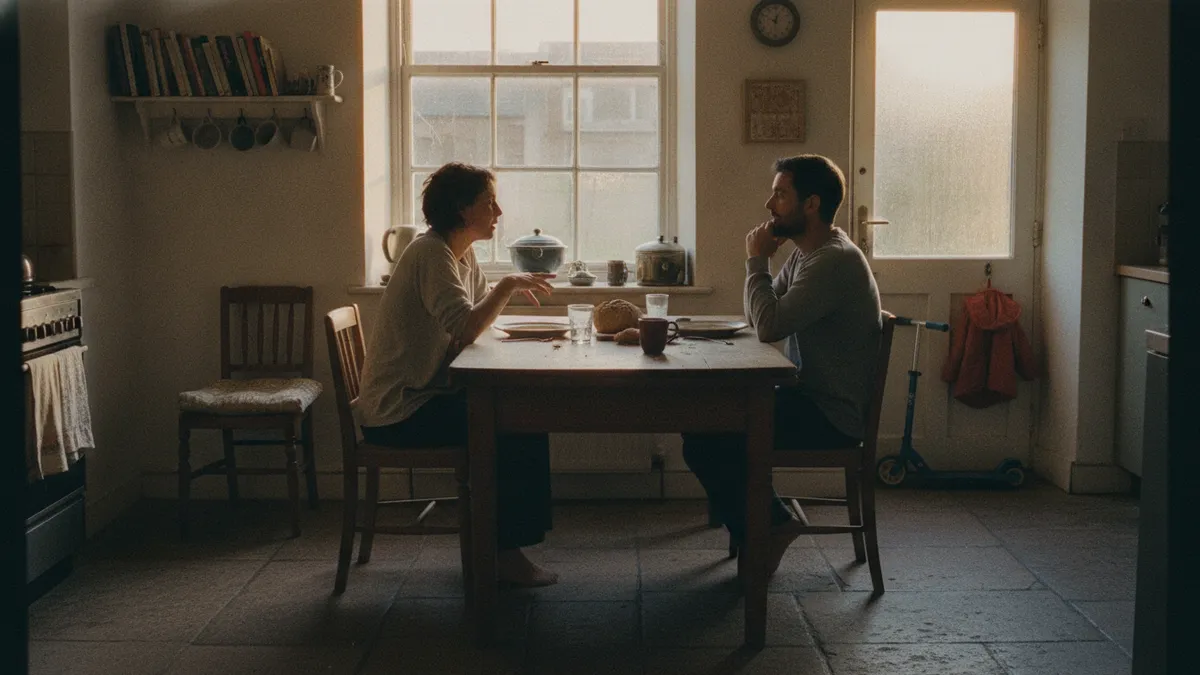
Two ways in

Written from her side
You are a single mother
Dating on limited time: the profile, the timing, the introduction — and the parts nobody schedules for you.
- Single Mom Dating Profile
- When Should a Single Mom Start Dating? There Is No Timeline
- Introducing Your Kids to Someone You're Dating

Written from his side
You are dating a single mother
What the schedule really looks like, what the child changes, and what turns out not to matter.
- Pros and Cons of Dating a Single Mom
- Dating a Single Mom Red Flags (and Green Flags), Both Ways
- Dating a Single Mom
“Is dating actually harder when there’s a child in the picture?”
Written from her side
The scheduling is harder — an evening out takes arrangements that childless dating never needed. The choosing is often clearer: what you want, what you won’t repeat, and how fast you say no. The part that needs protecting is not your calendar, it is your child’s world, and that has an order of steps.
Written from his side
The calendar asks more of you than the relationship does. Plans move, evenings end earlier, and none of it is a message about how she feels. The child changes the pace — not the point.
Start with these

Dating a single mom
Dating a Single Mom Red Flags (and Green Flags), Both Ways
Dating a single mom red flags run both ways: what to watch for in her, and what she is right to watch for in you. Two lists, the same length.

Dating as a single mom
Single Mom Dating Profile
What to put in a single mom dating profile, how to word the line about your child, and what to keep off a public profile entirely. With example lines.

Apps and reviews
Stir Dating App Review
The Stir dating app, reviewed independently: what it is, who runs it, what the free tier blocks, and why this page carries no prices. Checked August 20, 2026.

Dating a single mom
Pros and Cons of Dating a Single Mom
Not whether it's worth it. The pros and cons of dating a single mom in practice: time, plans, money, pace, and what both sides underestimate.

Dating as a single mom
When Should a Single Mom Start Dating? There Is No Timeline
When should a single mom start dating? There is no correct number of months — only a few practical signs, and one decision that does have a right order.

Apps and reviews
Free Single Mom Dating Site
Is there a free single mom dating site that works? Which apps are usable without paying, the exact action each one blocks, and why free rarely means messaging.
What actually changes, on both sides
Strip away the folklore and three things reliably change when one of the two people in a relationship is raising a child. None of them is a verdict on anybody; all three are logistics, and logistics can be planned for.
The schedule stops being negotiable between the two of you. Free evenings are produced by an arrangement — custody, school, childcare, a grandmother’s Tuesday — that was made before the relationship existed and does not bend to it. You can ask when she is free. You cannot trade for a Friday. Read from the outside this looks like deprioritisation; read from the inside it is a fixed constraint being mistaken for a signal about how somebody feels. Plans made early survive. Spontaneous ones are the first to go, and their cancellation means nothing beyond itself.
There is a third person in the relationship, and the relationship is not with them. The child is not a detail about her, and equally not a role the partner is auditioning for. The first stage of dating happens entirely without the child — that is a boundary this site treats as non-negotiable, and it is why the introduction has its own page with an order of steps rather than a timeline. Attachment that forms before the adults are stable is the one cost the order of steps exists to avoid.
The pace is set by the slower variable. Money, time and energy are all budgeted around a household that runs whether or not anyone is dating. That produces a slower start than either person may be used to — fewer evenings, planned further out, ending earlier. What it does not produce is a smaller relationship. The pages on both sides of this site return to the same point from opposite directions: the constraint is the schedule, not the person.
And one thing does not change: what the relationship is for. The conversations, the arguments, the plans, the reasons two adults choose each other — none of that is rewritten by the presence of a child. It is compressed into less time and scheduled around more constraints, which is a different thing from being diminished. The mistake both sides of the internet make is treating the logistics as the relationship; the logistics are the container, and this site spends its pages on the container precisely so the two people can spend their evenings on the rest.
Everything past those points depends on the two people involved, which is exactly why our pages describe arrangements and refuse verdicts. “Is this a good idea” is a question about you, answered by looking at what the trade-offs actually are — not by a website grading a category of people.
Why this site has two doors
The search results for this subject are one shared room. The person typing “single mom dating tips” and the person typing “advice for dating a single mom” land on the same pages, which means anything written for one of them is read by the other. Plenty of sites handle that by pretending the second reader does not exist — pages about single mothers written entirely over their heads, or pages for mothers that treat the other adult as a hazard to be managed.
We built the site around the overlap instead. Every page declares which side it is written from, the two sides get equal standing from the first screen, and the editorial test for any paragraph is whether it survives the other reader’s eyes. That is not diplomacy for its own sake: pages written this way end up more useful to their own audience too, because advice that cannot be said in front of the other person is usually advice about managing them rather than meeting them.
Written from her side
If you are the single mother
The practical problems are concrete: what to write in a profile, when to start, what to tell the people around you, and how the person you are seeing meets your child — if they ever do. Our answer to the profile question fits in a sentence: state the fact that you have a child, then stop. No name, no age paired with a location, no photo of the child, no custody schedule on a page strangers can open and search. The profile guide carries eight example lines and the full list of what stays off a public page permanently.
On timing, we will not hand you a number of months, because no defensible one exists — we looked, and the when-to-start page explains what we found instead: signs it is workable now, and the one decision that does have a right order. And because an evening out can feel like a cost rather than a break, the guilt and burnout page is about running on empty — including where an article’s job ends and a professional’s begins.
Written from his side
If you are dating one
The honest version of what you are weighing is not “is she worth it” — no page here treats that as a real question. It is: what changes in your week, what does the child change about the relationship, and what turns out to be noise. The main guide covers the day-to-day; the red flags page is symmetrical by design — what to watch for, and what she is right to watch for in you, in equal measure, because the second list is the one nobody writes.
If you have no children of your own, the childless-partner page describes the adjustments that are real and the ones people invent. If you are a parent too, two custody schedules is its own subject. And everything on this side is written knowing she can read it — which is not a constraint on honesty, it is the test of it.
Questions both sides ask
Written from her side
Should I mention my child in my profile?
Mention the fact; skip every detail. A line like “parent to one small person” does the filtering you want without giving a stranger anything to work with. What stays off permanently: the child’s name, age paired with a location, photos, school, custody schedule. The profile guide has the full list and example lines.
How long should I wait before dating again?
There is no correct number of months, and we will not invent one — no source we could verify measures it. What exists instead is a short list of practical signs it is workable now, and one decision with a right order: the relationship first, the introduction after. The timing page walks through both.
When does my child meet the person I’m seeing?
After the relationship is stable — and never as a way to test whether it is. Keep the first meeting short, public and low-stakes, and treat overnights as a separate, later decision rather than part of the same one. The introduction page sets out the order and the reasons behind it.
Written from his side
Is dating a single mom actually harder?
It is different in specific, nameable ways — the schedule, the pace, the third person — and unchanged in the ways people expect to struggle with. The folklore mostly describes relationships where nobody said what they wanted. The main guide separates the real adjustments from the noise.
What are the actual red flags?
Behavioural ones, in both directions: how plans are handled, what happens after a cancellation, whether the child is used as a shield or a bargaining chip — and on your side, impatience with the schedule and auditioning for a parental role nobody offered you. The red flags page keeps the two lists the same length on purpose.
I don’t have kids. Does that matter?
It changes some practical things — free time stops being symmetrical, and plans move for reasons that have nothing to do with you — but it is not a disqualification, and you are not applying to be a parent. The childless-partner page covers what actually needs adjusting.
The numbers, with sources
Every figure this site publishes is verified against a primary source and carries its own anchor — the statistics page lists all of them, including what we could not verify and therefore do not say.
Apps and reviews
Whether a niche dating app beats a general one is a real question with an unglamorous answer: it depends on what the free tier blocks and how many people are actually on it near you. A service built for single parents solves the disclosure problem — everyone there already knows — but a smaller pool is a real cost, and “built for parents” on the label says nothing about how the first message actually gets sent.
So our reviews stay inside what we can verify — what each service is, who owns it, what the free tier genuinely allows, action by action — and refuse what we cannot: we do not publish prices we have not checked against a real account, we do not score apps out of ten against a methodology we do not have, and every checked claim carries its date. Where a review has a hole, the review says so in plain text instead of papering over it.
We disclose how this site earns on the editorial policy page, and the disclosure sits above every comparison table, not in a footer. The apps hub holds the full set, including faith-based options.

How this site works
singlemommeet is an independent editorial project — AI-assisted, human-edited, with no named personas and no invented experts. Articles are written against a fact gate: a number either traces to a named primary source with a year and a working link, or it does not appear. The gate’s rejections are documented alongside its approvals on the sources page, because what we declined to claim says as much about the method as what we kept. The same discipline applies to language: a quantity smuggled in without a digit — “most people find”, “usually about a year” — is treated as a fabricated statistic and cut.
Both audiences read the same site, so every page is written to survive being read by the other side. Pages carry a marker — written from her side, from his side, or both — so nobody mistakes who is being addressed. Images are generated, and labelled for what they are: photorealistic frames say AI-generated image, drawn charts say Diagram. The people in them do not exist, no image here is a photograph of anyone who writes this site, and none of them depicts a child — which on this site is a rule and not a taste.
What this site is not
Not a dating service: there is no signup here, nothing to match with, and we are not affiliated with any platform we review. Not legal or psychological advice: custody, child support and divorce procedure go to a professional, and our pages say so at the point where the boundary is reached rather than in small print. And not a place that hands out verdicts on people — including the people who decide this kind of relationship is not for them.
The catalogue of everything, by section and date, lives at the article index.
Where to start, by situation
- Writing a profile tonight and unsure what to say about your child — the profile guide, examples included.
- Wondering whether it is too soon to date again — the timing page, which will not give you a number and explains why.
- A few dates in and starting to plan the first meeting with the child — the introduction page, order of steps first.
- Deciding whether to keep seeing someone who is raising a child — the trade-offs page, both directions, no verdicts.
- Not sure what is a warning sign and what is just a schedule — the red flags page, two lists of equal length.
- About to pay for a dating app — where the free tier stops, then the Stir review.
The short version
Dating with a child in the picture is ordinary. What changes is logistics: a schedule set outside the relationship, plans that move, a pace set by the slower variable — and an introduction that has an order, not a deadline. Neither side needs a verdict; both sides need the same three or four things described plainly, which is what this site is for. Start at her side or his side, check the app reviews before paying for anything, and if you only read one page, make it the one closest to the decision actually in front of you. Everything else — the sources behind every number, the corrections policy, how this site earns and what it refuses to do for money — is one click away in the footer, written in the same plain register as the rest.
One honest letter a week
Something went wrong and your email was not saved — please try again.
No spam, ever. Unsubscribe anytime.